Address:
Lujiadi No. 24, Xiama Village, Yuantou Town, Zanhuang County, Shijiazhuang, Hebei 051230, China
Work Hours:
Mon - Sat: 9:00 AM - 6:00 PM (GMT+8)
Address:
Lujiadi No. 24, Xiama Village, Yuantou Town, Zanhuang County, Shijiazhuang, Hebei 051230, China
Work Hours:
Mon - Sat: 9:00 AM - 6:00 PM (GMT+8)
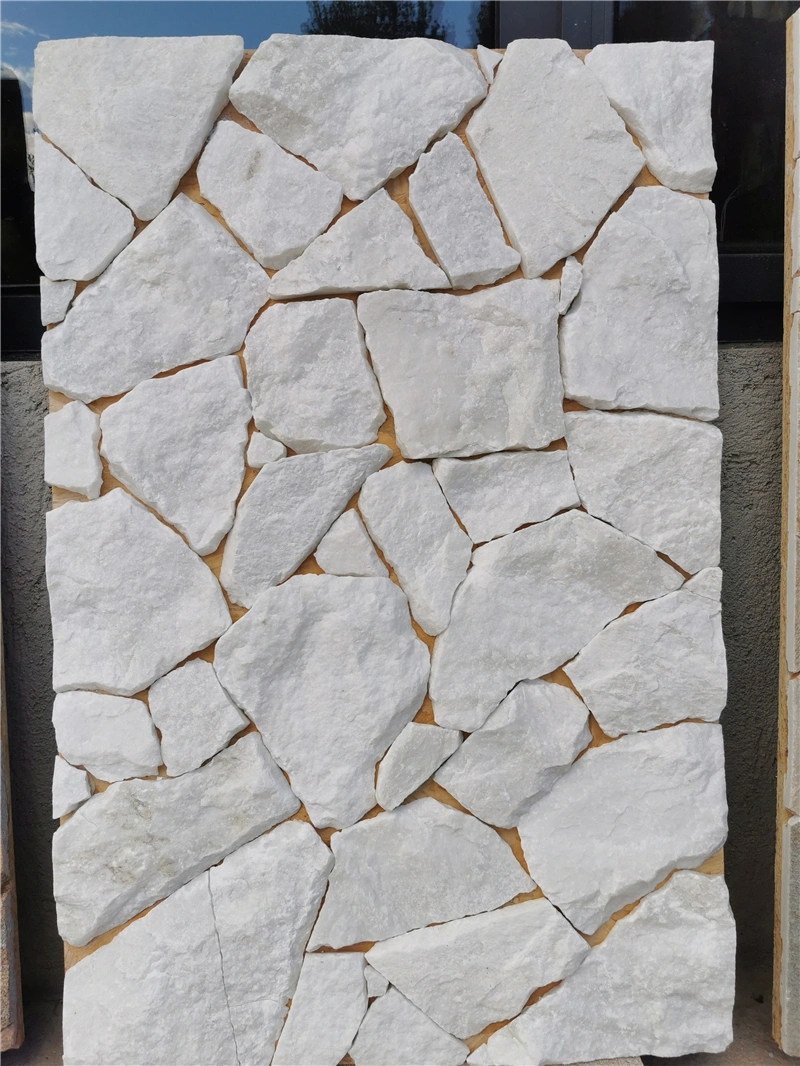
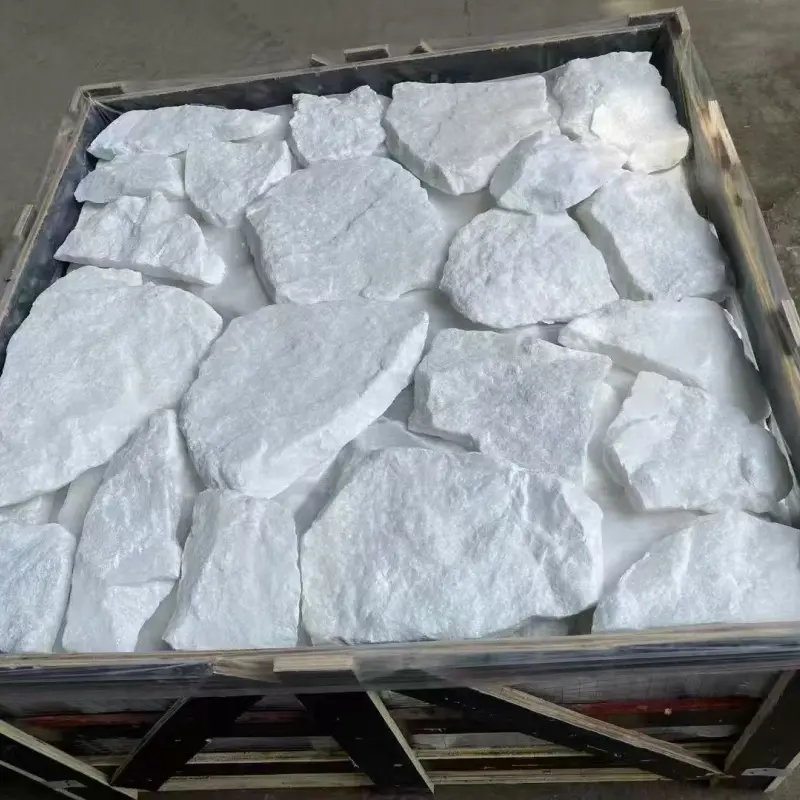
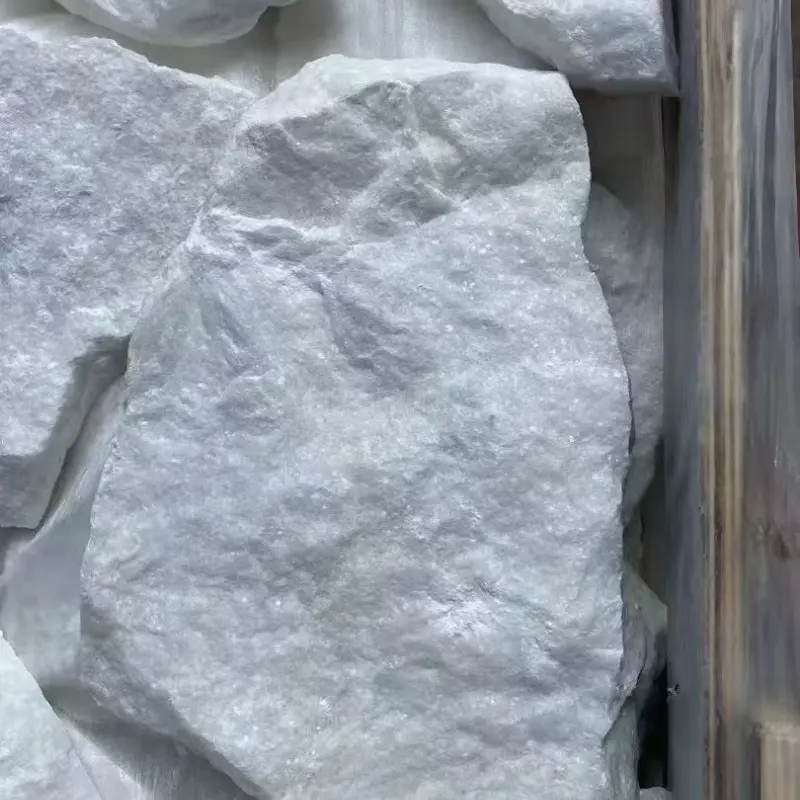
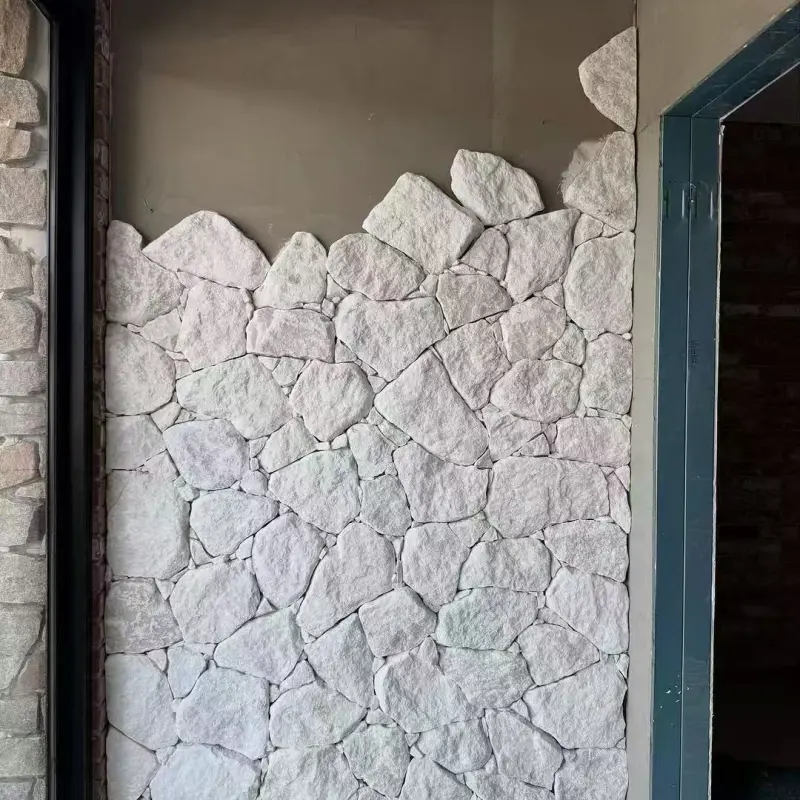
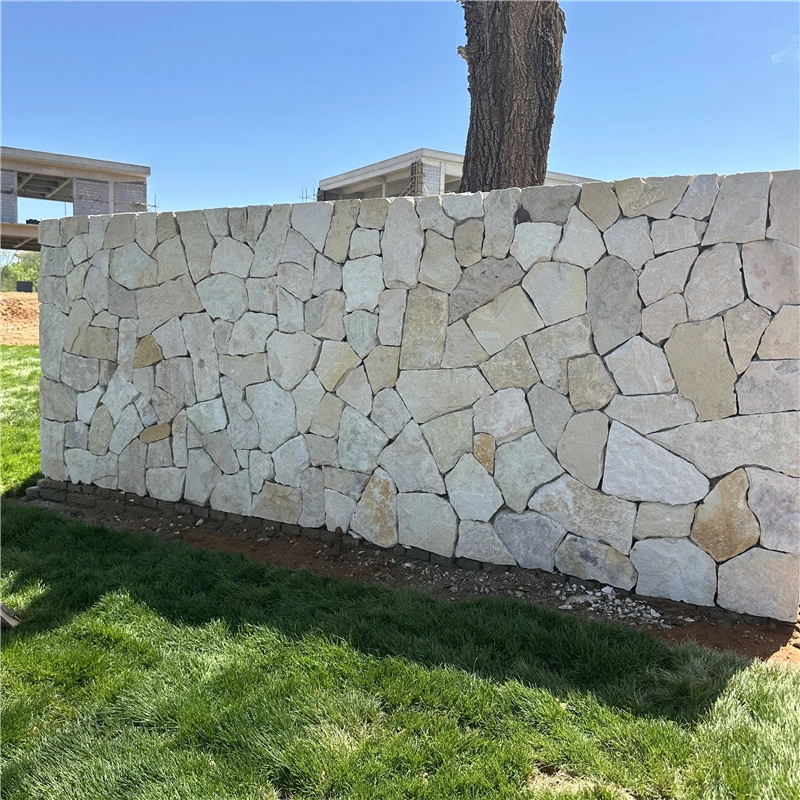
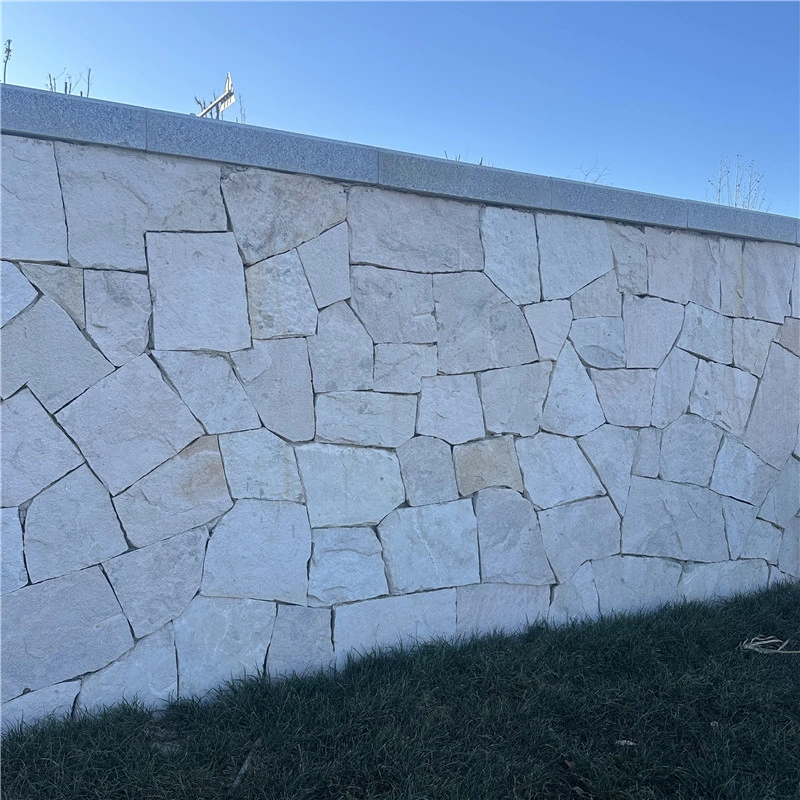
Outdoor walls play an important role in connecting architecture with the surrounding landscape. Instead of using a completely uniform wall finish, natural stone can introduce variation, depth, and a stronger connection with nature. White Natural Crazy Paving Wall Stone is a practical option for projects that need an irregular stone appearance with a light and versatile color palette.
The combination of white and natural stone tones can work with modern architecture, traditional houses, garden structures, and contemporary landscape projects. The irregular shapes also create a more organic surface, making the wall feel less repetitive than a standard flat finish.
For designers, architects, and builders, the material can be considered for a range of outdoor applications, from small residential gardens to larger landscape projects.
Garden walls are one of the most natural applications for White Natural Crazy Paving Wall Stone. A light-colored stone surface can help define planting areas while maintaining an open and bright outdoor atmosphere.
In a private garden, the stone can be used on low walls surrounding planting beds, seating areas, or pathways. The irregular pattern works particularly well with greenery because the natural stone texture contrasts with leaves, grasses, and other landscape elements.
Courtyards offer another opportunity. A stone-clad wall can become a background for outdoor furniture, planters, lighting, or water features. Rather than covering every surface, designers can use the stone selectively on one wall to establish a visual focal point.
The white and neutral tones are also easy to combine with timber, concrete, dark metal, and natural paving. This makes the material suitable for contemporary residential landscapes where several different textures need to work together.
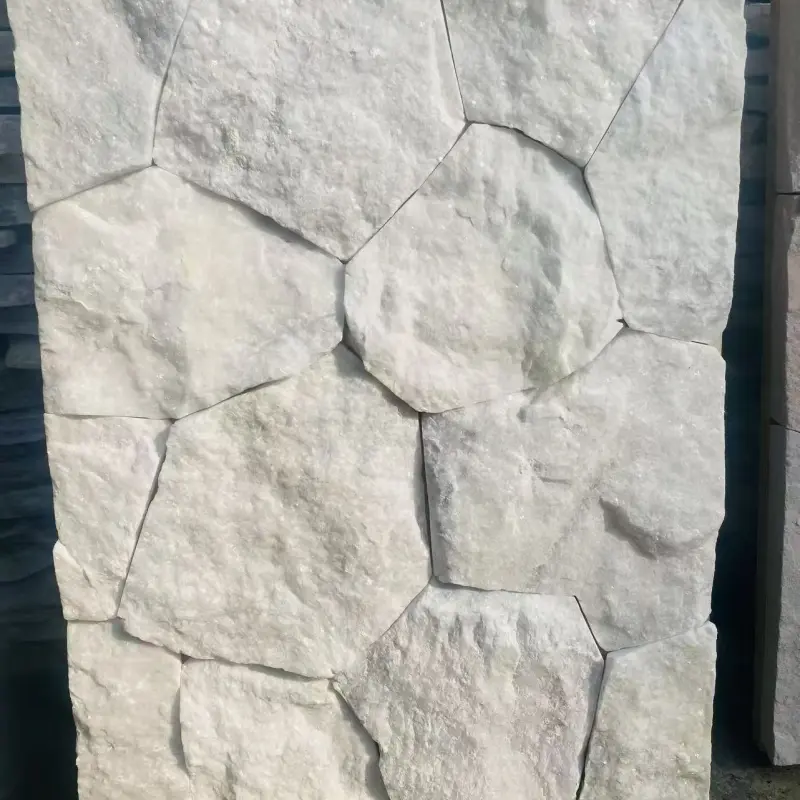
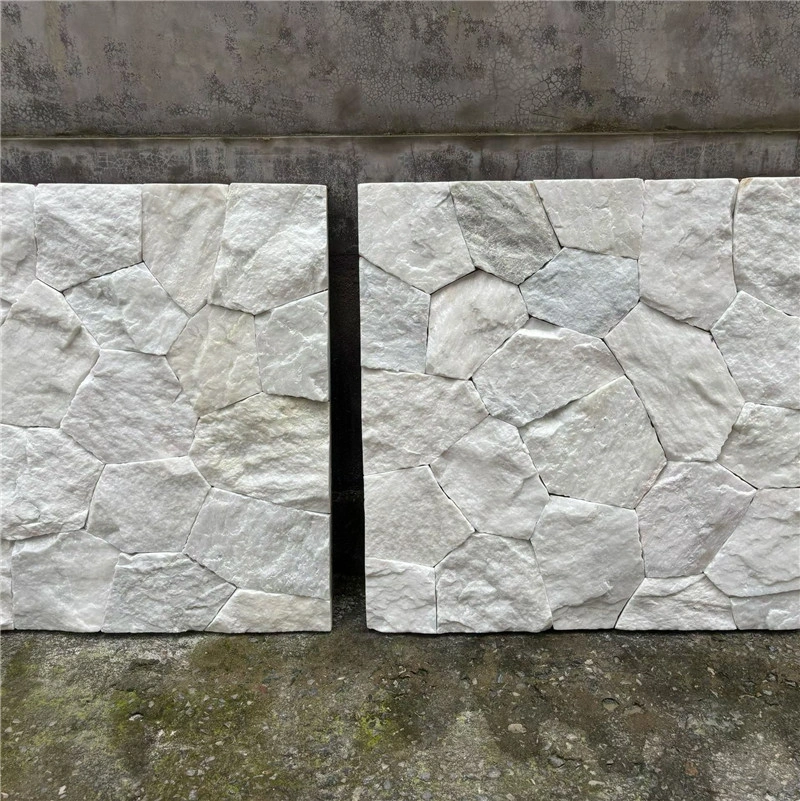
A well-designed entrance can give a residential project a stronger architectural identity. White Natural Crazy Paving Wall Stone can be used around entrance walls, columns, boundary sections, or covered outdoor areas to introduce natural texture without making the design visually heavy.
For modern homes, an irregular stone wall can soften the clean lines of glass, concrete, and metal. For more traditional properties, the same material can reinforce a natural architectural character.
Outdoor living areas are another useful application. Patios, covered terraces, seating areas, and garden entertainment spaces can benefit from a textured stone background. A feature wall behind an outdoor dining area or seating zone can visually separate the space while maintaining an open connection with the garden.
The stone can also be coordinated with surrounding paving and landscaping materials. Using similar neutral tones across walls, pathways, and planting areas can create a more unified outdoor environment.
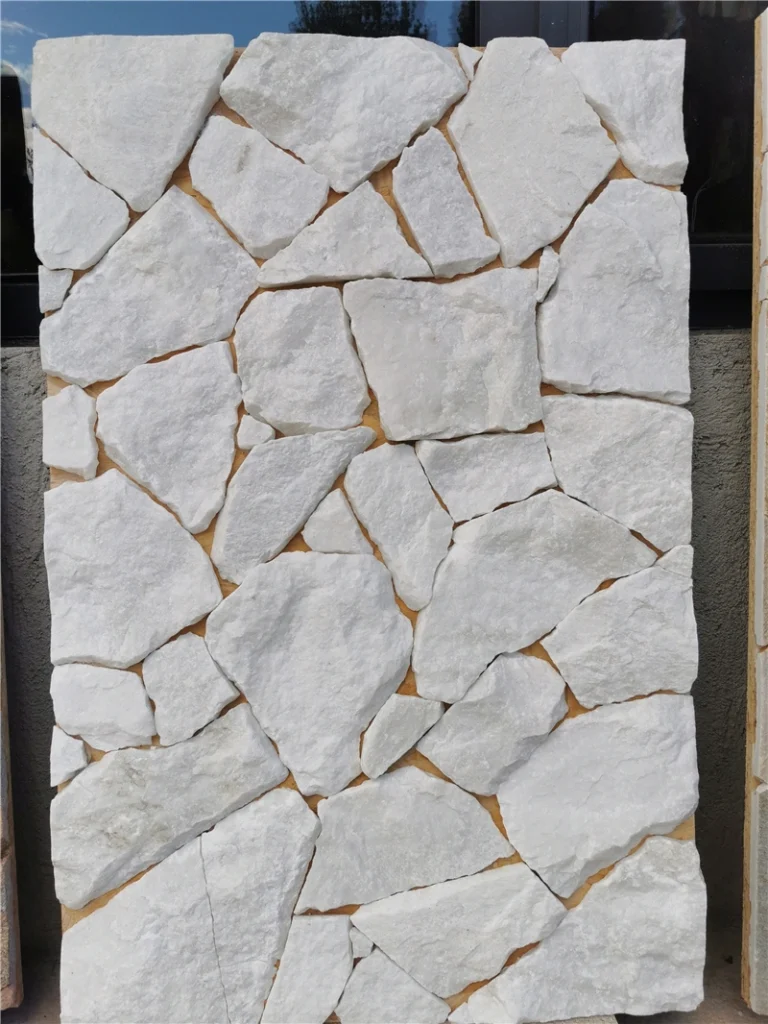
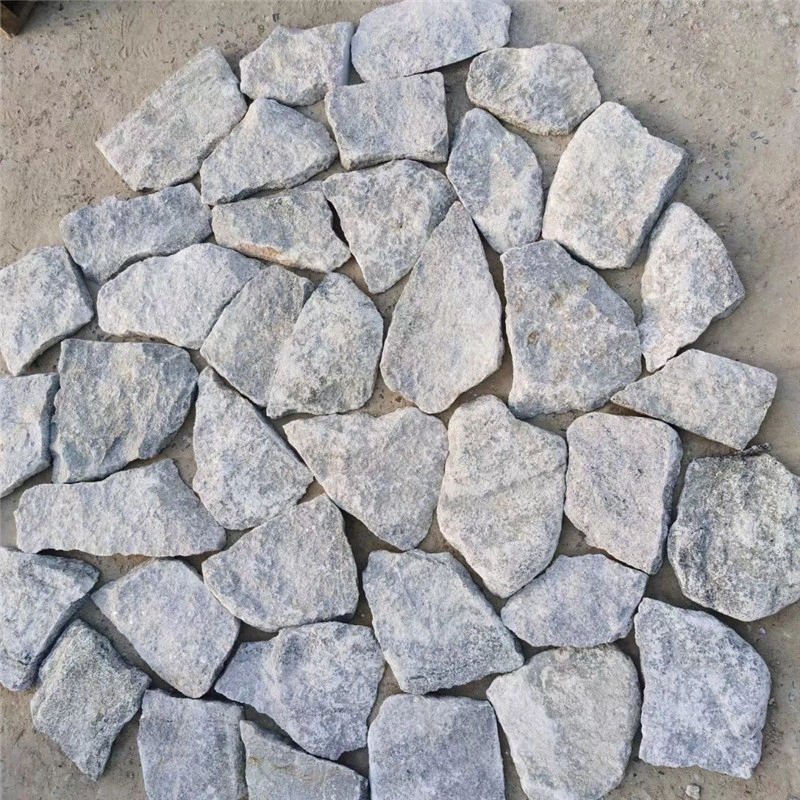
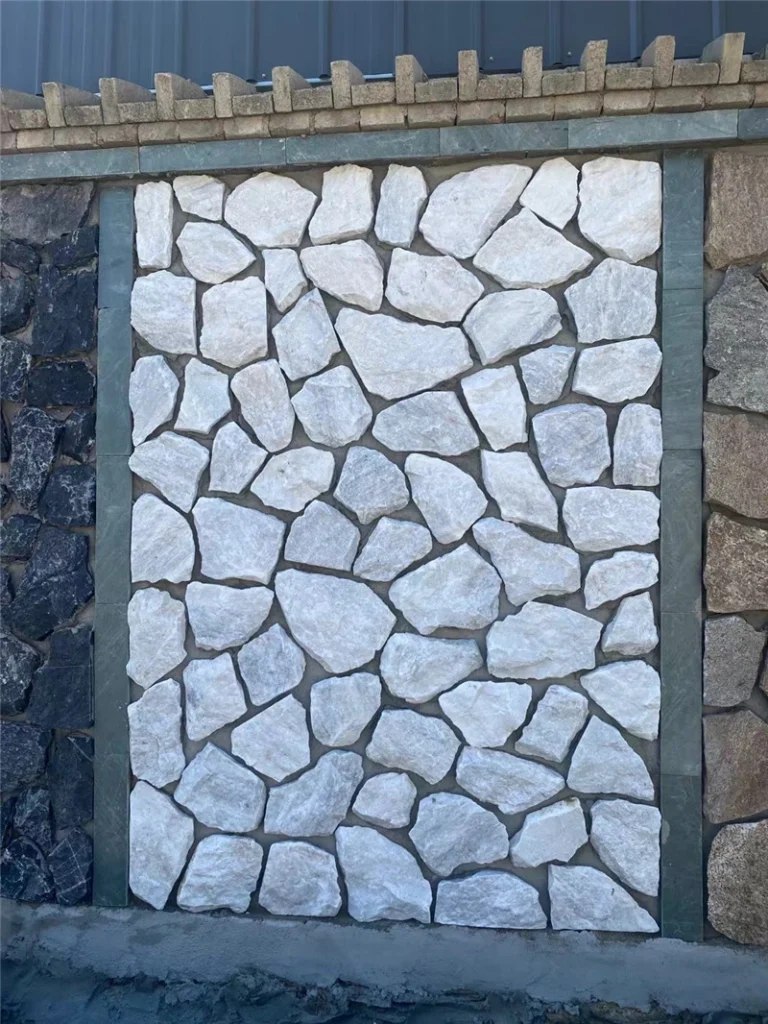
The appeal of White Natural Crazy Paving Wall Stone is not limited to one architectural style. Its irregular shape and natural surface can be incorporated into both contemporary and more organic landscape concepts.
For residential landscape projects, it can be considered for boundary walls, garden structures, poolside walls, and selected facade areas. In larger projects, similar applications can appear in boutique hotels, resorts, restaurants, and commercial outdoor spaces where designers want to create a natural material palette.
The key is to balance the irregular stone surface with simpler surrounding elements. Clean-lined furniture, minimalist planting, timber, concrete, and metal can prevent the wall from becoming visually overwhelming. At the same time, natural stone provides the texture that plain architectural surfaces often lack.
When used thoughtfully, White Natural Crazy Paving Wall Stone can turn an ordinary outdoor wall into an important part of the overall landscape composition. From garden boundaries and courtyard walls to entrances and outdoor living spaces, its light color and irregular natural appearance provide designers with a flexible material for creating textured exterior environments.