Address:
Lujiadi No. 24, Xiama Village, Yuantou Town, Zanhuang County, Shijiazhuang, Hebei 051230, China
Work Hours:
Mon - Sat: 9:00 AM - 6:00 PM (GMT+8)
Address:
Lujiadi No. 24, Xiama Village, Yuantou Town, Zanhuang County, Shijiazhuang, Hebei 051230, China
Work Hours:
Mon - Sat: 9:00 AM - 6:00 PM (GMT+8)

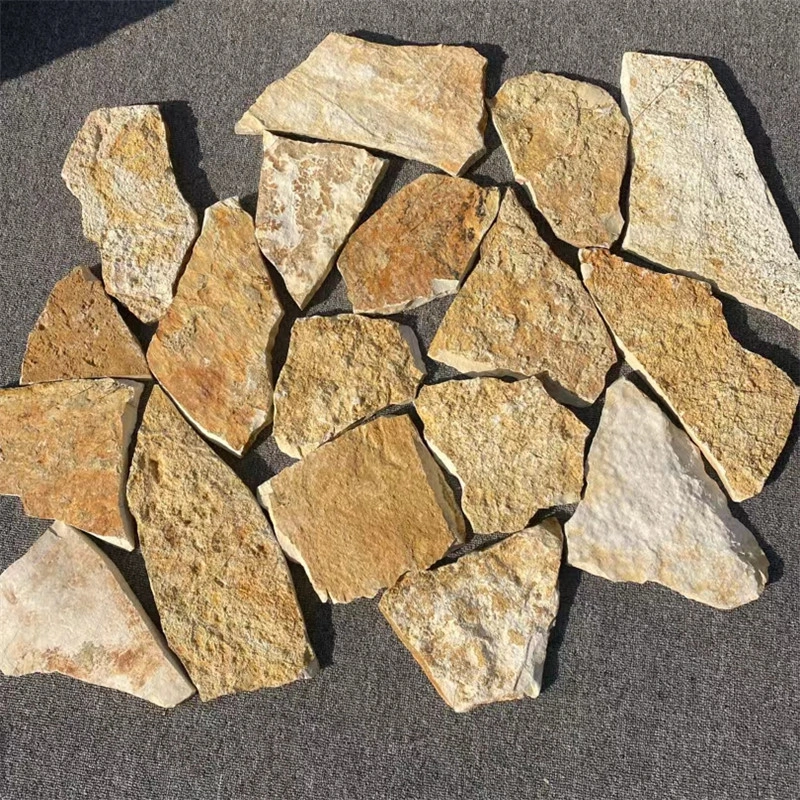
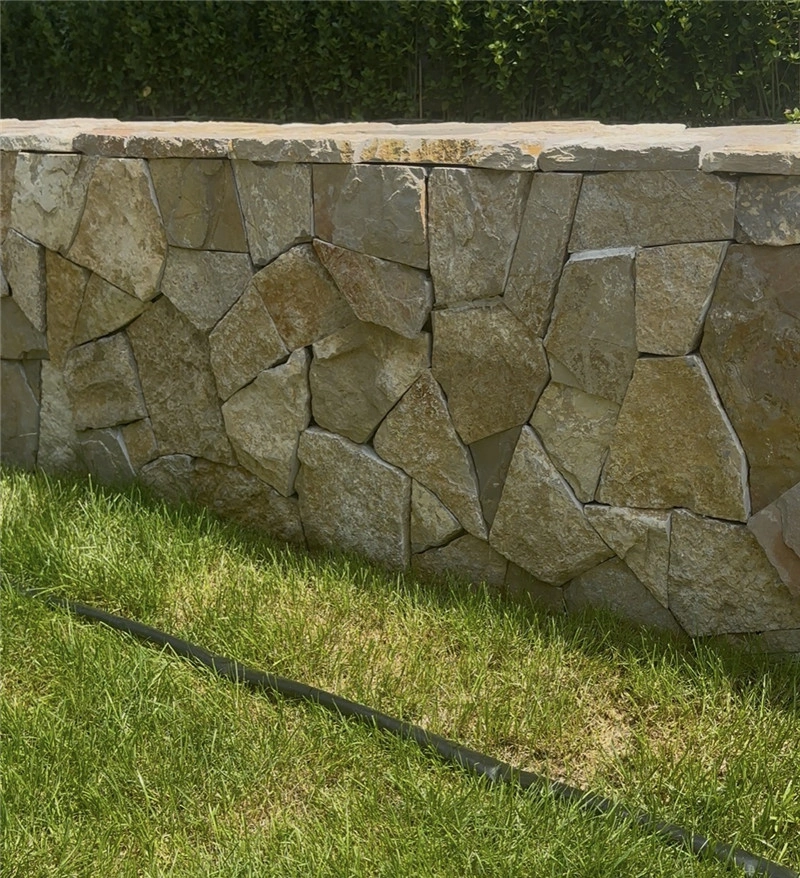
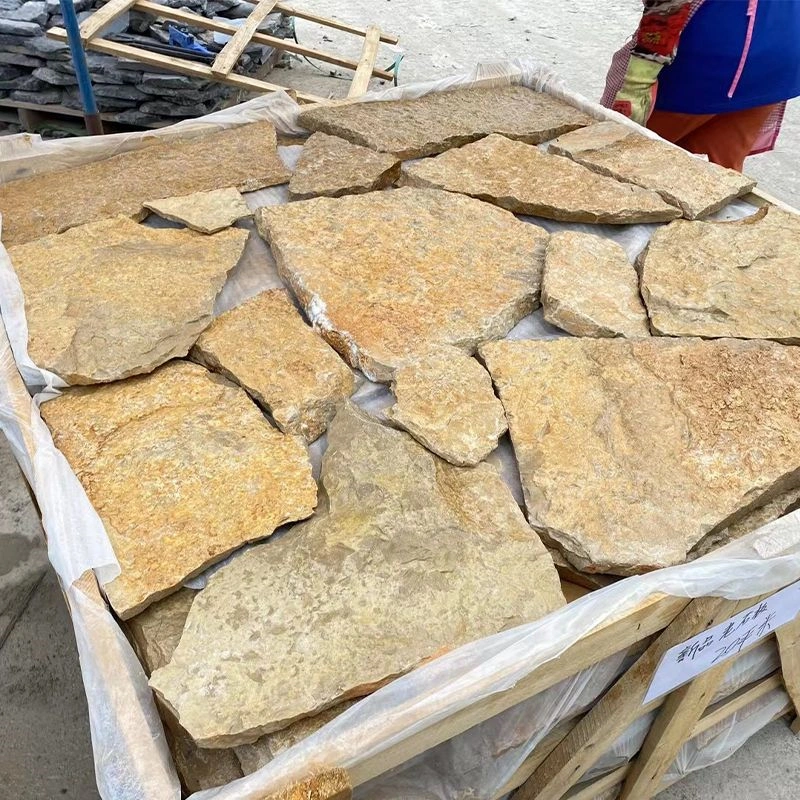
Honey Random Stone Cladding is a natural stone wall covering made from irregular pieces with warm honey, beige and earthy color variations. Before installation, it is important to consider the stone shape, thickness, surface and the condition of the wall. These factors influence both the appearance of the finished surface and the installation method.
The irregular pieces of Honey Random Stone Cladding create a naturally varied pattern rather than a regular grid. Each piece can have a different outline, size and tone, so the final appearance depends partly on how the stones are selected and arranged. Sorting the material before installation can help create a more balanced distribution while keeping the natural character of the stone.
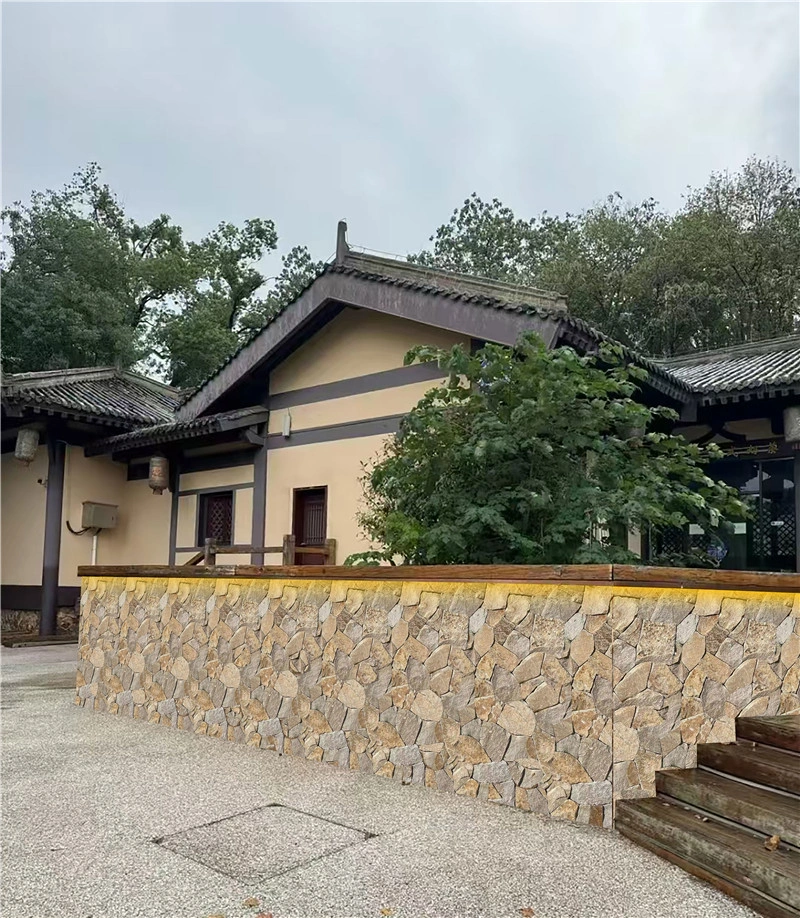
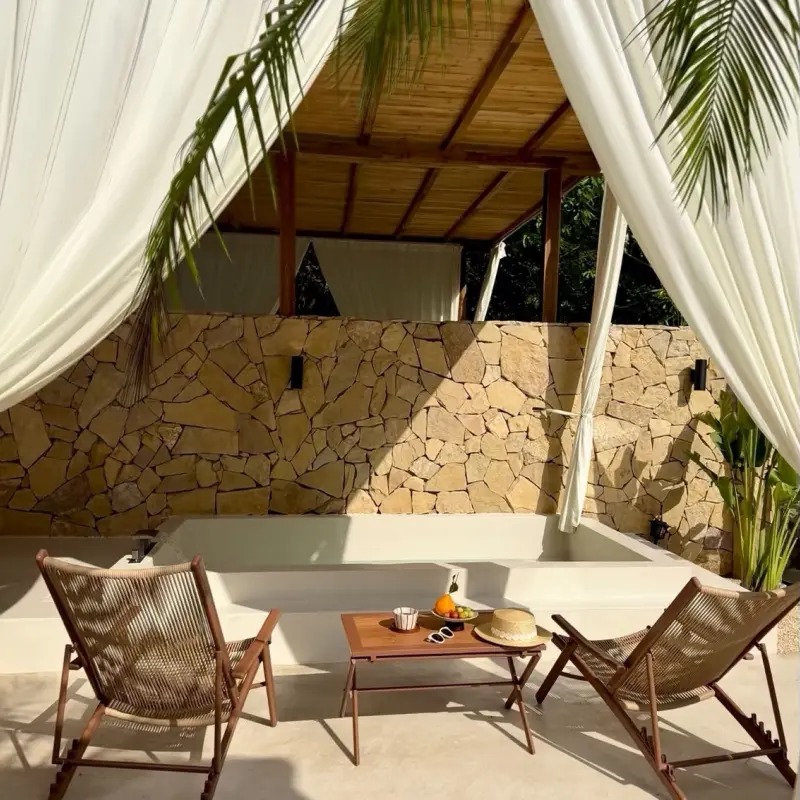
Honey Random Stone Cladding can be considered for exterior walls, entrance areas, boundary walls and feature walls. When the substrate and installation conditions are suitable, it can also be used for selected interior applications such as fireplace surrounds and accent walls.
Before installing Honey Random Stone Cladding, check the actual stone for color range, thickness and surface texture. Natural stone normally contains variations, so a small sample may not show the complete range that will appear across a finished wall. Honey tones can vary from lighter beige and yellow to deeper golden and earthy shades.
The wall should be clean, stable and suitable for the selected installation method. Dust, loose coatings, weak surfaces or moisture problems should be addressed before the stone is fixed. For exterior applications, the wall assembly should also be appropriate for local weather conditions and the weight of the stone.
Thickness should be checked before installation as well. Random stone does not always have a completely uniform thickness, and the supplied range can affect adhesive coverage, joint depth and the final wall plane. Understanding the actual material before work begins makes the installation easier to plan.
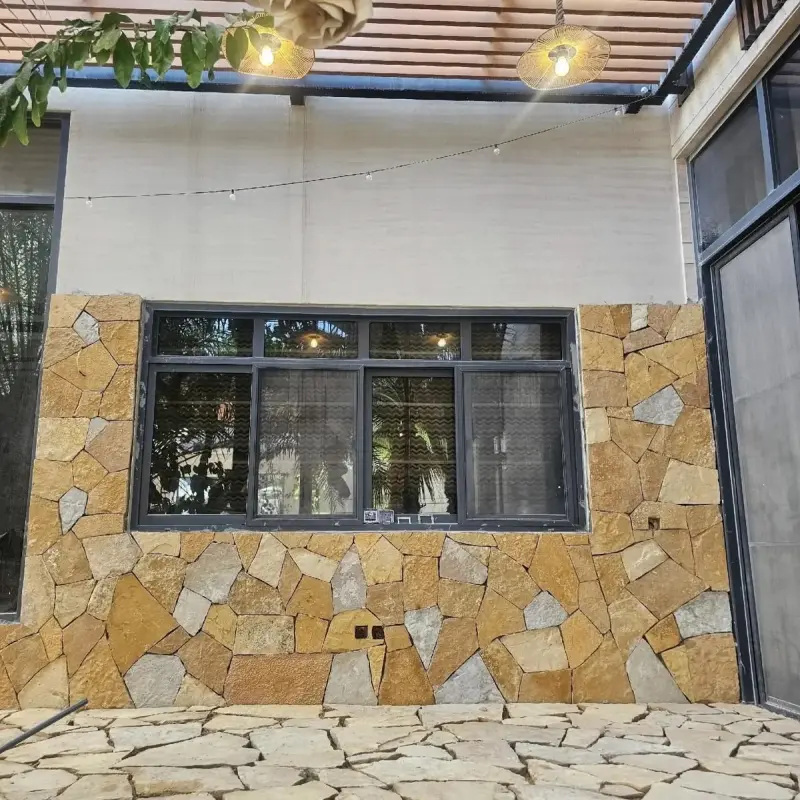
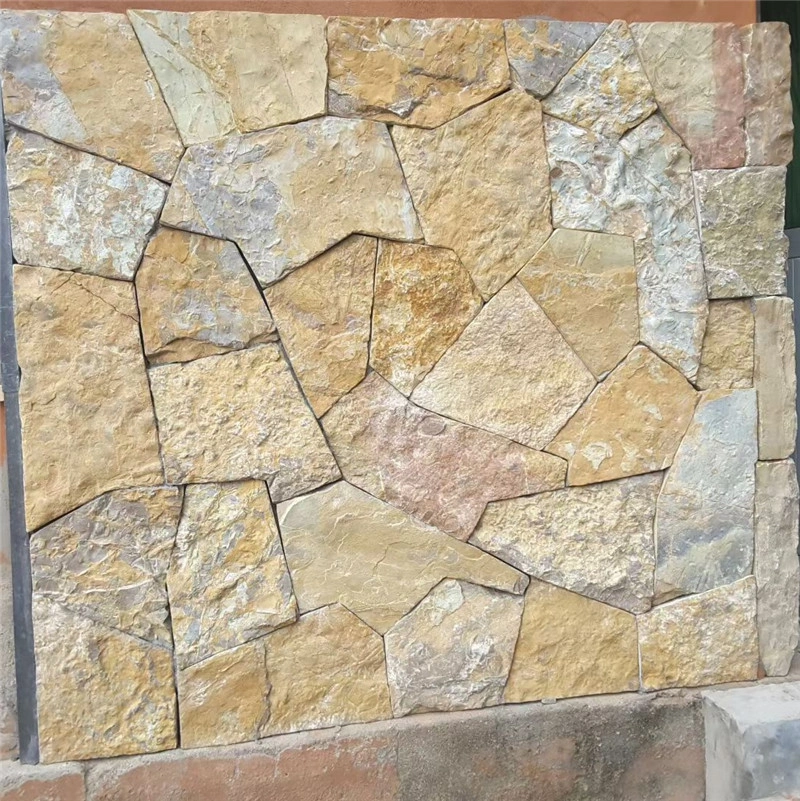
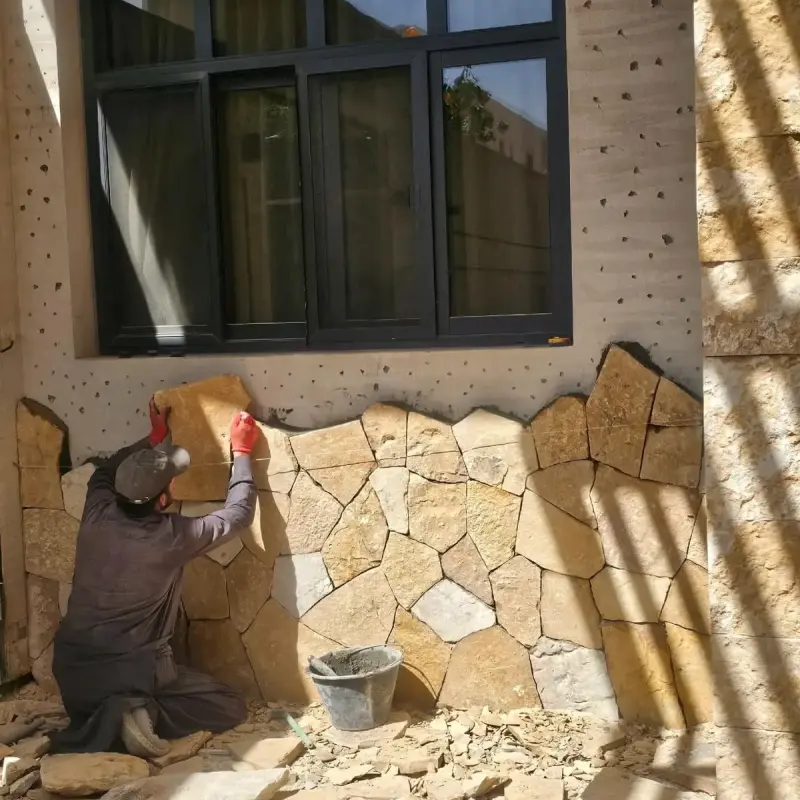
A random stone wall still requires a planned layout. Spread the pieces out before fixing them and review their sizes, shapes and colors. Avoid putting too many pieces with similar shapes or tones together. Larger stones can be balanced with smaller pieces to create a more natural distribution across the surface.
Corners, openings and wall edges also need attention. Some locations may require cutting or selecting stones with suitable shapes. If several walls are included in the same project, consider the overall color distribution instead of treating each wall separately.
Joint width is another point to decide in advance. Depending on the product and installation method, the stones may be placed with tighter joints or more visible gaps. The chosen joint style affects the overall appearance and should work with the irregular shape of the stone.
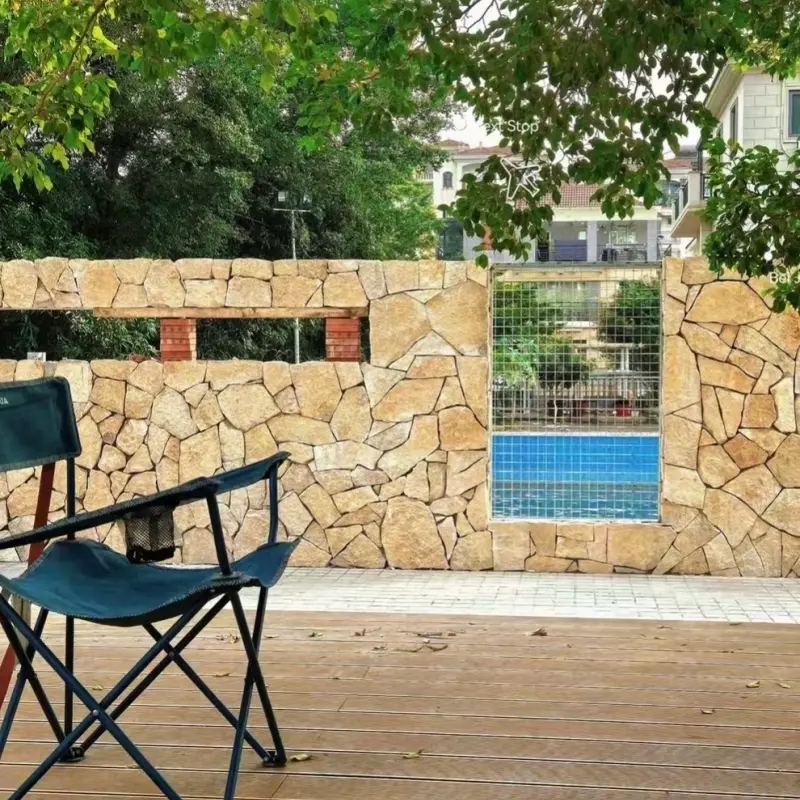
Installation should follow the recommended method for the specific stone and wall substrate. Suitable fixing materials should be selected according to the stone type, wall condition and application. Exterior installations may require additional attention to weather exposure, drainage and movement.
During installation, work according to the planned arrangement rather than simply taking pieces from the package one by one. Step back regularly and check the overall surface from a distance. This makes it easier to identify areas where similar colors or shapes have become concentrated.
Clean excess installation material from the stone surface according to the appropriate procedure. Avoid changing the natural surface unnecessarily, especially when the split or textured face is an important part of the finished appearance.
Honey Random Stone Cladding works well when its natural variation is treated as part of the overall wall design. Checking the material, preparing the substrate and planning the layout before fixing can help maintain a balanced random pattern while allowing the natural color and shape of the stone to remain visible.